The platform builds and repositions manufactured housing communities to a single standard, through a small set of disciplines: how we create supply, where we operate, how we select sites, and how we keep communities insurable.
Every fund works along the same two tracks — improving what exists, and building what doesn’t — matched to where the better risk-adjusted return sits at the time.
We acquire under-managed communities, raw and entitled land, and individual finished lots — and we structure each acquisition around the owner’s goals.
A straightforward purchase, on a timeline that works for the owner.
Roll land into the project as equity — deferring a taxable sale and participating in the value created.
Joint-venture structures for owners who want to stay involved in the outcome.
Structures vary by situation and are undertaken alongside an owner’s own tax and legal advisors. Nothing here is tax or legal advice.
Alongside whole-community acquisition and development, the platform acquires individual finished lots from builders and institutions — a disciplined way to add scale, lot by lot, inside active markets.
The platform concentrates where the workforce-housing shortage, the regulatory path to real-property classification, and operating economics align. Markets are organized into tiers rather than chased opportunistically.
California, Nevada, Washington, and Oregon — the platform’s primary focus.
Arizona, Utah, and Idaho — selectively, where the standard travels.
Texas and New Mexico — on an opportunistic basis only.
Market designations describe the platform’s strategy framework and may evolve. They are not a representation about any specific fund’s holdings or pipeline.
Site selection follows a repeatable methodology rather than instinct: demand depth for attainable ownership, the statutory path to real-property classification, infrastructure and entitlement risk, and the operating economics that make a community durable.
The discipline is the point. The same framework is applied to every site the platform evaluates, so each fund implements one method — not a new thesis each time.
Concentration of Missing-Middle households the market has priced out.
A clear route to real-property classification for long-term leasehold communities.
Infrastructure, entitlement, and management economics that hold up over a full cycle.
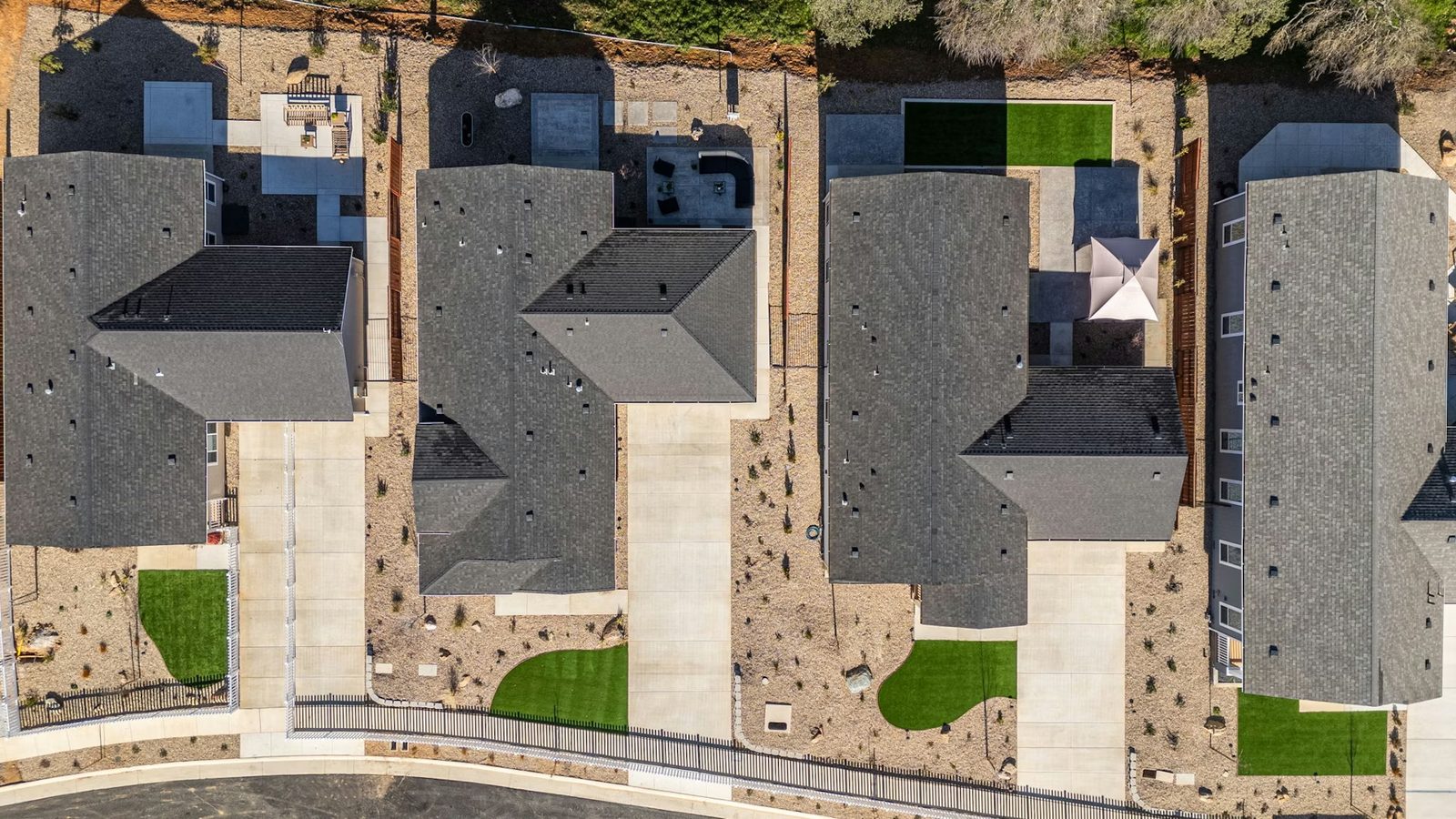
In markets where carriers have pulled back, insurability is part of the underwriting. Communities are designed to recognized fire-resilience and durability standards — including Firewise USA® and FORTIFIED Home™ practices — pursued where the cost-benefit analysis supports them.
